





Popular
What is the significance of Harry Bosch's mother's death in his life and career?
How does Bosch's relationship with his daughter Maddie evolve throughout the series?
What role does the character of Jerry Edgar play in Bosch's investigations?
What is the impact of the LAPD's internal politics on Bosch's cases?
How does Bosch's past as a former soldier influence his approach to policing?
Should I watch it?
Ask Your Own Question

What is the plot?
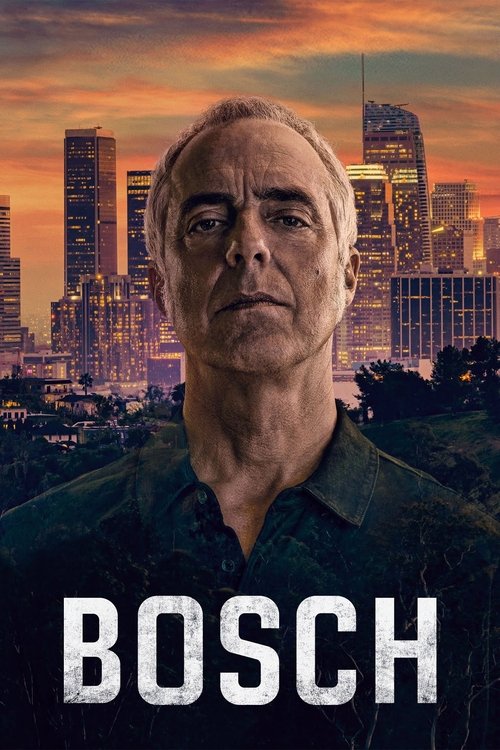
In the opening of Bosch, we are introduced to LAPD detective Harry Bosch, who is in the midst of a trial for the murder of a serial killer named Anthony Allen Shore. The trial is tense, with Bosch's past as a former cop and his controversial methods being scrutinized. The prosecution argues that Bosch acted out of revenge, while Bosch maintains that he was simply doing his job. The trial's outcome hangs in the balance, and Bosch's internal struggle with his past and the morality of his actions is palpable.
After the trial, Bosch returns to work at the LAPD, where he is assigned to a cold case involving the murder of a young boy named Frank Morgan, who was killed in 1993. The case is particularly haunting for Bosch, as it resonates with his own troubled childhood. He begins to dig deeper into the evidence, interviewing witnesses and examining old leads. His determination to find justice for the boy drives him, and he becomes increasingly obsessed with the case.
As Bosch investigates, he discovers that Frank's mother, who had been a key witness, has died under suspicious circumstances. This revelation leads him to question the integrity of the original investigation. Bosch's relentless pursuit of the truth puts him at odds with his superiors, particularly Captain Irving, who is more concerned with the department's image than with solving the case. Bosch's frustration grows as he feels the weight of the bureaucracy stifling his efforts.
Simultaneously, Bosch's personal life is complicated by his relationship with his daughter, Maddie. He struggles to balance his demanding job with being a present father. Their interactions reveal Bosch's vulnerability and desire to protect Maddie from the darkness of his world. He often reflects on his past choices and how they affect his family, adding emotional depth to his character.
As Bosch continues to unravel the mystery surrounding Frank's murder, he uncovers a connection to a powerful figure in the city, which complicates his investigation. This leads him to confront the realities of corruption within the police force and the influence of wealthy individuals on the justice system. Bosch's determination to expose the truth puts him in danger, as he begins to receive threats aimed at deterring him from pursuing the case.
In a pivotal moment, Bosch discovers that Frank's murder is linked to a larger conspiracy involving drug trafficking and organized crime. He realizes that the case is not just about one boy's death but is part of a systemic issue that has plagued the city for years. This revelation intensifies Bosch's resolve, and he becomes more aggressive in his pursuit of justice, even as it alienates him from his colleagues.
As the investigation heats up, Bosch faces increasing pressure from both the department and the criminals he is pursuing. He is forced to navigate a web of deceit and danger, leading to a series of confrontations with suspects and informants. Each encounter is fraught with tension, as Bosch's instincts and experience guide him through perilous situations. His determination to protect the innocent and bring the guilty to justice drives him forward, even when the odds seem insurmountable.
The climax of the season occurs when Bosch finally confronts the individuals responsible for Frank's murder. In a tense showdown, he faces off against a key suspect who has been evading justice. The confrontation is intense, filled with physicality and emotional stakes, as Bosch fights not only for his own life but for the memory of the boy he has been seeking justice for. The scene is charged with adrenaline, showcasing Bosch's skills as a detective and his unwavering commitment to his cause.
In the aftermath of the confrontation, Bosch's actions lead to significant consequences for both himself and the city. He is hailed as a hero by some, while others in the department view him as a rogue cop who operates outside the law. The resolution of Frank's case brings closure to the boy's family, but it also leaves Bosch grappling with the moral complexities of his choices and the impact they have on his life and career.
As the season concludes, Bosch reflects on the toll that his pursuit of justice has taken on his personal life. His relationship with Maddie remains strained, and he is left to ponder the sacrifices he has made in the name of duty. The final scenes hint at the ongoing struggles he will face as he continues to navigate the challenges of being a detective in a flawed system, setting the stage for future conflicts and developments in his journey.







What is the ending?
In the ending of the TV show Bosch, Harry Bosch confronts the truth behind the murder of his mother, leading to a tense showdown with the antagonist. The season culminates in Bosch's personal and professional life intertwining, as he faces the consequences of his actions while seeking justice. The series concludes with Bosch making a significant decision about his future, leaving the door open for new beginnings.
As the final episodes unfold, we find Harry Bosch deeply entrenched in the investigation of a cold case that has haunted him for years--the murder of his mother, which he has been trying to solve throughout the series. The emotional weight of this case is palpable, as Bosch's memories of his mother and the impact of her death shape his motivations.
Scene by scene, the tension builds. Bosch, portrayed by Titus Welliver, is relentless in his pursuit of the truth. He interviews witnesses and digs through old evidence, revealing layers of corruption and deceit that have long been buried. The audience sees Bosch's determination, his frustration, and his moments of vulnerability as he grapples with the implications of what he might uncover.
In a pivotal moment, Bosch confronts the man he believes is responsible for his mother's death. This confrontation is charged with emotion, as Bosch's anger and pain surface. The scene is intense, filled with Bosch's internal struggle between his role as a detective and his personal quest for closure. The stakes are high, and the audience can feel the weight of Bosch's choices as he navigates this dangerous territory.
As the investigation reaches its climax, Bosch's relationships with his colleagues and his daughter, Maddie, come into sharp focus. Maddie, played by Madison Lintz, represents a new generation and a chance for Bosch to break the cycle of violence and loss that has defined his life. Their bond is tested as Bosch's obsession with the case threatens to pull him away from her. The emotional stakes are high, and the audience witnesses Bosch's internal conflict as he balances his duty to the job with his responsibilities as a father.
In the final scenes, Bosch makes a choice that reflects his growth as a character. He decides to leave the LAPD, a decision that signifies a turning point in his life. This moment is bittersweet, as it encapsulates Bosch's journey throughout the series--his relentless pursuit of justice, his struggles with authority, and his desire for personal redemption. The audience sees Bosch walking away from the precinct, a man who has faced his demons and is ready to embrace a new chapter.
The fate of the main characters is intertwined with Bosch's decision. Maddie is left with a sense of hope for the future, as she understands her father's need to move on. Other characters, such as Bosch's partner Jerry Edgar, played by Jamie Hector, and the various antagonists he has faced, are left to deal with the consequences of their actions. The series closes with a sense of resolution, yet it leaves room for interpretation about what lies ahead for Bosch and those around him.
In the end, Bosch's journey is one of resilience and the quest for truth, encapsulating the complexities of his character and the world he inhabits. The final moments resonate with the themes of justice, family, and the enduring impact of the past, leaving the audience with a lasting impression of Bosch's legacy.
Is there a post-credit scene?
The TV show Bosch, produced in 2015, does not feature post-credit scenes. Each episode concludes with a standard ending, focusing on the resolution of the plotlines presented within that episode. The series maintains a consistent tone and pacing, emphasizing the narrative and character development without the addition of post-credit sequences. The storytelling is tightly woven, with each episode designed to lead seamlessly into the next, keeping viewers engaged with the unfolding mystery and character arcs.
What is the significance of Harry Bosch's mother's death in his life and career?
Harry Bosch's mother's death is a pivotal event that shapes his character and motivations throughout the series. As a child, Bosch learns that his mother was a prostitute who was murdered, which instills in him a deep sense of loss and a desire for justice. This traumatic experience drives him to become a detective, as he seeks to solve crimes and protect the vulnerable, reflecting his unresolved feelings about his mother's fate. The emotional weight of her death influences his relationships and his often solitary nature, as he grapples with the impact of his past on his present.
How does Bosch's relationship with his daughter Maddie evolve throughout the series?
Bosch's relationship with his daughter Maddie is complex and evolves significantly over the course of the series. Initially, their interactions are strained due to Bosch's dedication to his work and his struggles with being a single parent. As the series progresses, Bosch makes a conscious effort to connect with Maddie, sharing his experiences and involving her in his life. Their bond deepens as they navigate personal challenges together, showcasing Bosch's growth as a father and his desire to protect Maddie from the darker aspects of his world.
What role does the character of Jerry Edgar play in Bosch's investigations?
Jerry Edgar serves as Bosch's partner and confidant, providing both professional support and personal camaraderie. Throughout the series, Edgar's character is portrayed as a foil to Bosch; he often approaches cases with a more pragmatic and cautious mindset, contrasting Bosch's instinctual and sometimes reckless methods. Their dynamic is marked by mutual respect, but also tension, as they navigate the complexities of their cases and the moral ambiguities of police work. Edgar's loyalty and friendship become crucial as they face various challenges, including corruption within the department and the dangers of their investigations.
What is the impact of the LAPD's internal politics on Bosch's cases?
The internal politics of the LAPD significantly impact Bosch's investigations, often creating obstacles that complicate his pursuit of justice. Throughout the series, Bosch faces pushback from superiors who prioritize public relations and departmental politics over the truth. This tension is exemplified in various cases where Bosch's relentless pursuit of justice puts him at odds with higher-ups, leading to conflicts that threaten his career. The political landscape forces Bosch to navigate a web of alliances and rivalries, highlighting the challenges faced by detectives who are committed to their work in a flawed system.
How does Bosch's past as a former soldier influence his approach to policing?
Bosch's past as a former soldier profoundly influences his approach to policing, shaping his worldview and methods. His military background instills in him a strong sense of duty, discipline, and a commitment to protecting the innocent. However, it also brings a darker side, as Bosch struggles with the psychological scars of his experiences in combat. This duality manifests in his interactions with suspects and victims, where he often exhibits a no-nonsense attitude and a willingness to confront danger head-on. His military training informs his investigative techniques, making him a formidable detective, but it also complicates his relationships, as he grapples with the moral implications of his actions.
Is this family friendly?
"Bosch," produced in 2015, is a crime drama series that delves into the life of LAPD detective Harry Bosch. The show is known for its mature themes and content, making it less suitable for children and sensitive viewers. Here are some potentially objectionable or upsetting aspects:
-
Violence: The series features graphic depictions of crime scenes, including murder investigations, which can be intense and disturbing.
-
Language: There is frequent use of strong language throughout the series, including profanity that may not be appropriate for younger audiences.
-
Adult Themes: The show explores complex themes such as corruption, morality, and the darker sides of human nature, which may be challenging for younger viewers to understand.
-
Substance Abuse: Characters occasionally engage in drinking and drug use, which may be concerning for sensitive viewers.
-
Emotional Turmoil: The characters often deal with trauma, loss, and personal struggles, which can evoke strong emotional responses.
-
Sexual Content: There are scenes that include sexual situations and suggestive content, which may not be suitable for children.
Overall, "Bosch" is intended for a mature audience and contains elements that could be upsetting or inappropriate for younger viewers.